
Birds may seem like a strange topic for an English lesson, but they appear in…
The Ultimate Guide to Teaching Regular and Irregular Plurals to Online English Learners
For some reason, English plurals have a way of making things more complicated than they need to be. You’d think turning one noun into more than one would be as simple as adding an -s and calling it a day. And for many nouns, it is! But once you venture beyond books and dogs, things start to get a little trickier.

From spelling changes like baby → babies to irregular forms like child → children and mouse → mice, English plurals come with a surprising number of rules and plenty of exceptions that, unfortunately, need to be memorized. For English learners, knowing when to add -s, -es, or -ies, and when to use a completely different word altogether can be confusing.
In this post, we’ll break down the most common regular and irregular plural patterns and explore some simple tricks you can use to help your students remember them.
1) Start with the Basic Rule: Add -s

Explain that for most English words, we only need to add -s to turn it into plural.
Examples:
- One book → two books
- One cat → three cats
- One pen → five pens
- One car → ten cars
2) Teach the -es Rule

Some nouns need -es instead of simply -s. This commonly happens when a noun ends in: -s, -ss, -sh, -ch, -x, or -z.
Examples:
- Bus → buses
- Class → classes
- Dish → dishes
- Watch → watches
- Box → boxes
- Quiz → quizzes
Remember to tell your students that -es also adds an extra syllable at the end of the word! Have students clap the difference: box (one clap), boxes (two claps).
3) Some Words Ending in -y Turn into -i
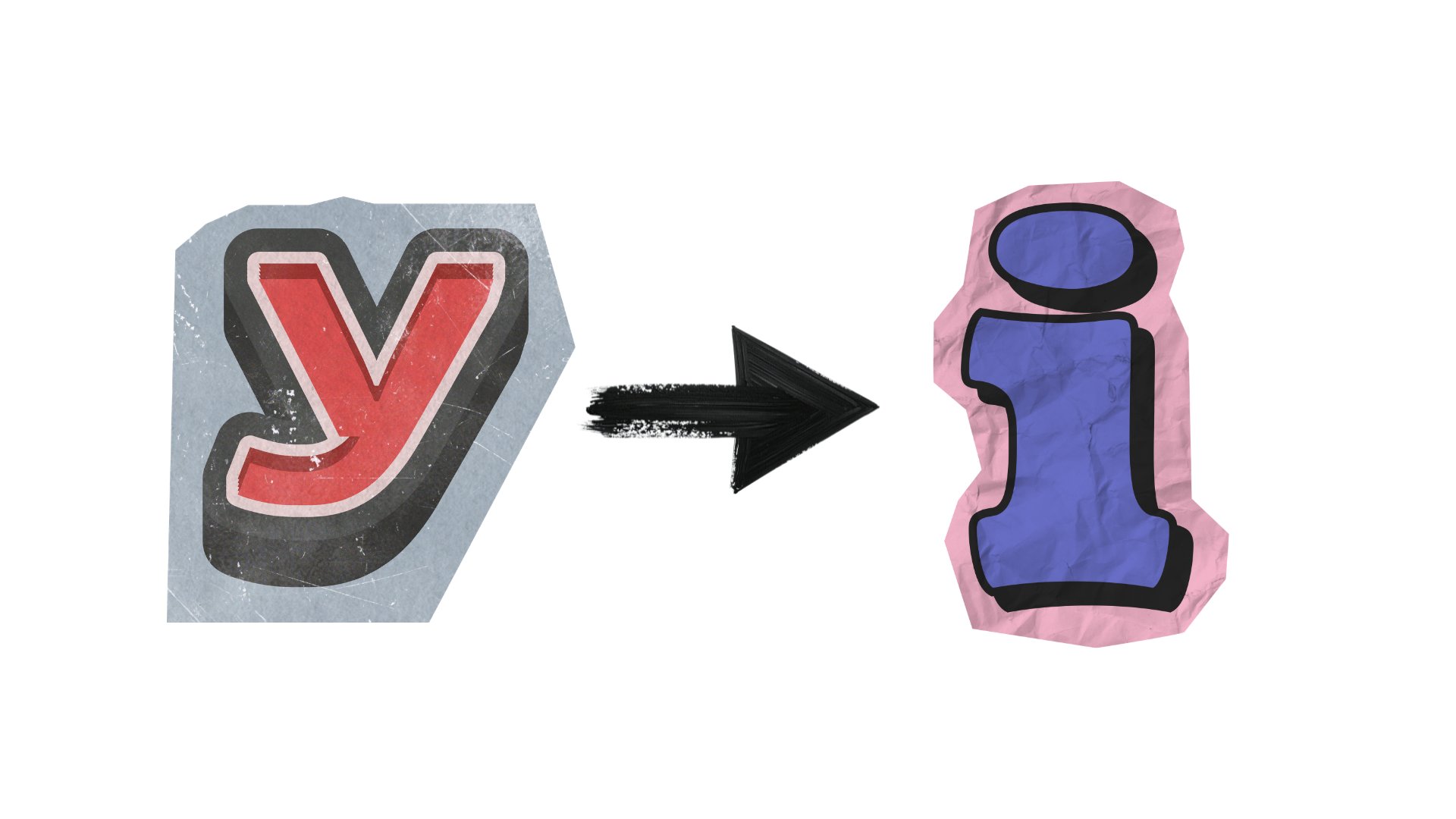
Words ending in consonant + y usually change the “y” to “i” before adding -es.
Examples:
- Baby → babies
- City → cities
- Party → parties
- Story → stories
However, if there is a vowel before the “y,” we only add -s.
Examples:
- Boy → boys
- Toy → toys
- Key → keys
- Day → days
4) Many Words Ending with -f/-fe Become -ves
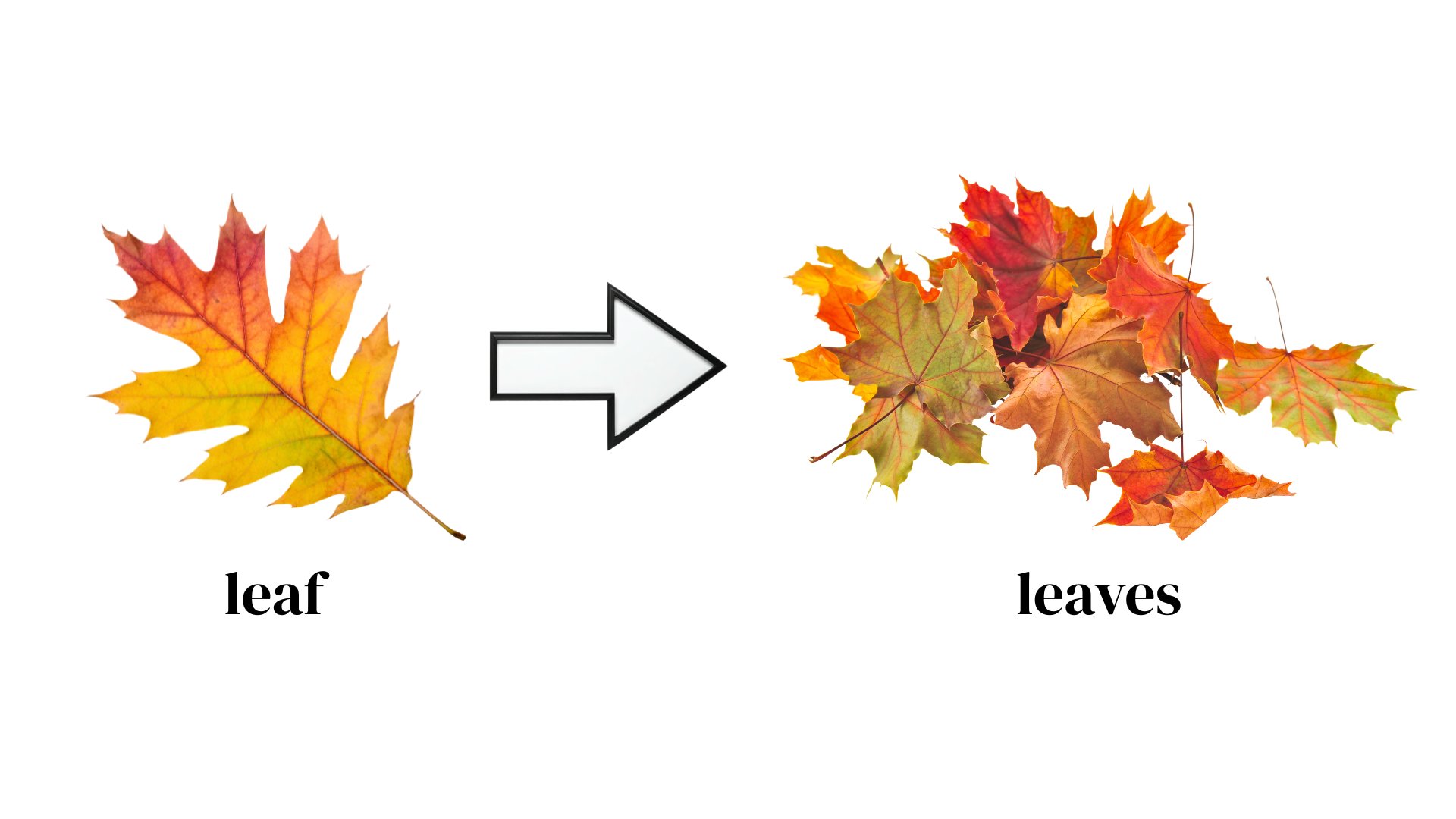
It’s important to note that not every word ending in -f follows this rule, but the majority do.
Examples:
- Knife → knives
- Wife → wives
- Life → lives
- Leaf → leaves
- Wolf → wolves
- Shelf → shelves
- Half → halves
- Loaf → loaves
Here are some words that don’t follow this rule:
- Roof → roofs
- Chef → chefs
- Belief → beliefs
5) Introduce the Rule-Breakers: Irregular Plurals
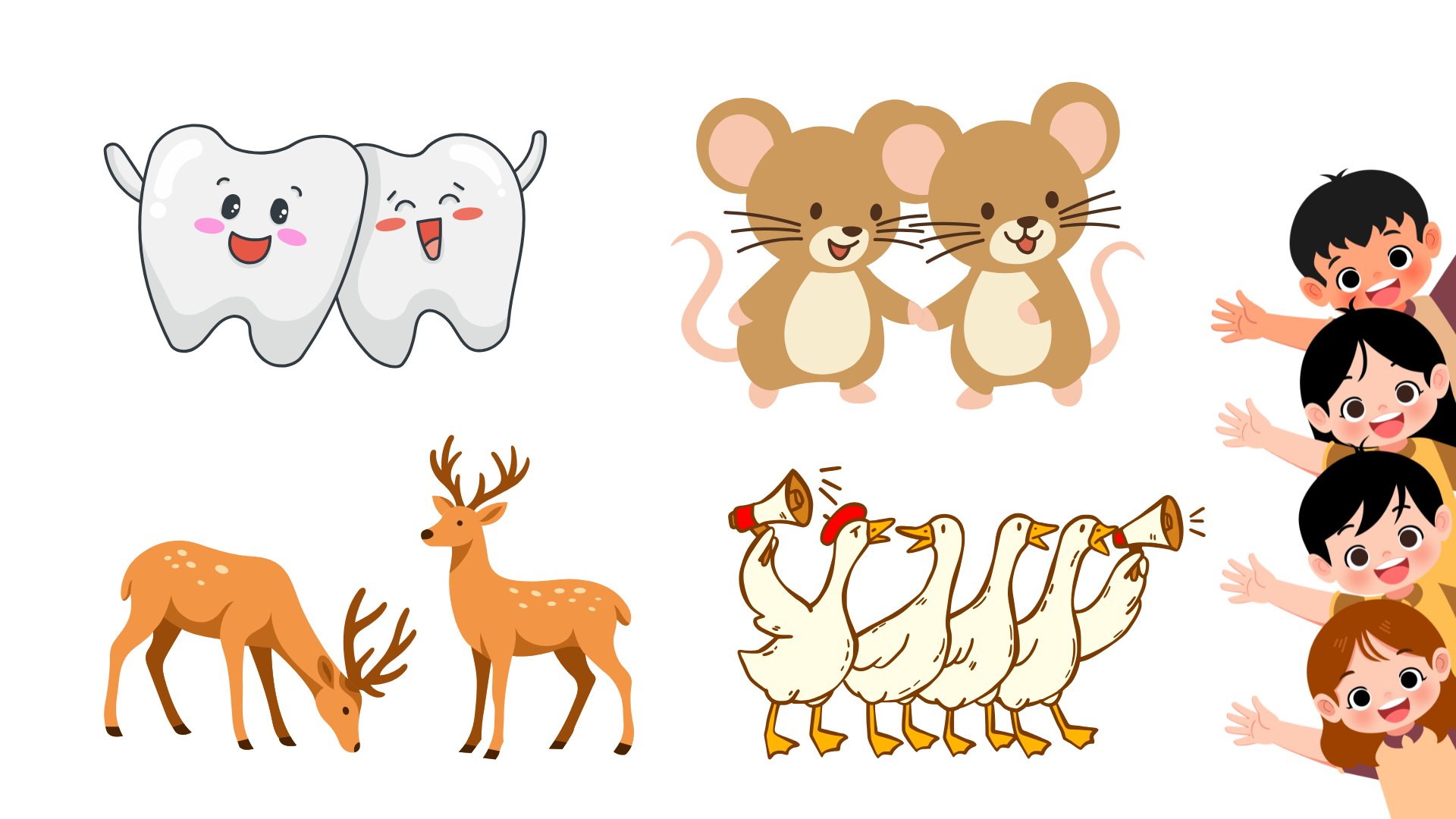
Once students understand regular plurals well, introduce irregular plurals. Explain that these nouns don’t follow the usual rules. Instead of adding -s or -es, the word changes in a different way.
Here are some of the most common examples:
|
Singular |
Plural |
|
Man |
Men |
|
Woman |
Women |
|
Child |
Children |
|
Person |
People |
|
Tooth |
Teeth |
|
Foot |
Feet |
|
Goose |
Geese |
|
Mouse |
Mice |
|
Ox |
Oxen |
|
Sheep |
Sheep |
|
Deer |
Deer |
|
Fungus |
Fungi |
You can show pictures and ask your students to count the number of items in the picture to practice plurals. Encourage them to answer in complete sentences, such as, “There are four dogs,” “There are two boxes,” “There are 10 children.”
Repetition and practice with fun activities will help your students remember plural rules and exceptions more quickly.
We hope you found this guide to teaching regular and irregular plurals useful! Let us know in the comments section what other English grammar points you’d like us to cover in future newsletter articles.

Related Posts