
In the first part of our series on bringing hygge into your online classroom, we…
10 Best Word Board Games for ESL Students (Part 1)
Looking for a fun way to help your ESL students improve their English? Put away the worksheets for a few lessons and bring out the board games!
Word games are a fantastic way to make language learning more engaging. They encourage students to recall vocabulary, practice spelling, describe unfamiliar concepts, and communicate in English. Students have a ton of fun playing these games while naturally practicing the language skills they need.
This week, we’ll introduce five word games that can make excellent additions to your ESL classroom. And if you teach online, several of these games can be adapted for virtual lessons too! Whether you teach children, teenagers, or adults, there are games here that can suit all ages.
1) Scrabble: Build Words, One Letter at a Time

Scrabble is a classic word game that challenges players to create words using letter tiles. Each player takes turns placing letters on the board, connecting their words to those already played. Different letters and board spaces earn different points, so students must think carefully about both vocabulary and strategy.
For ESL students, Scrabble provides an opportunity to practice spelling while discovering new words. It also encourages learners to think about prefixes, suffixes, and different forms of a word.
2) Taboo: Describe It Without Saying It!
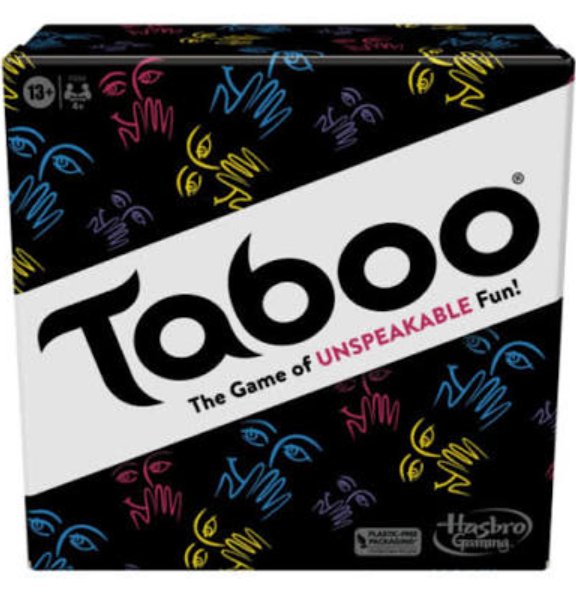
Taboo is a lively guessing game in which players must help their teammates guess a target word without using certain forbidden words.
For example, a student might need to describe the word umbrella without saying rain, wet, weather, open, or cover. They must find another way to explain the concept, perhaps by saying, “You hold it over your head when water falls outside.”
This is exactly the kind of skill language learners need in real-life conversations. When they forget a word, they can still communicate by describing it in another way.
3) Scattergories: Think Fast and Think Creatively
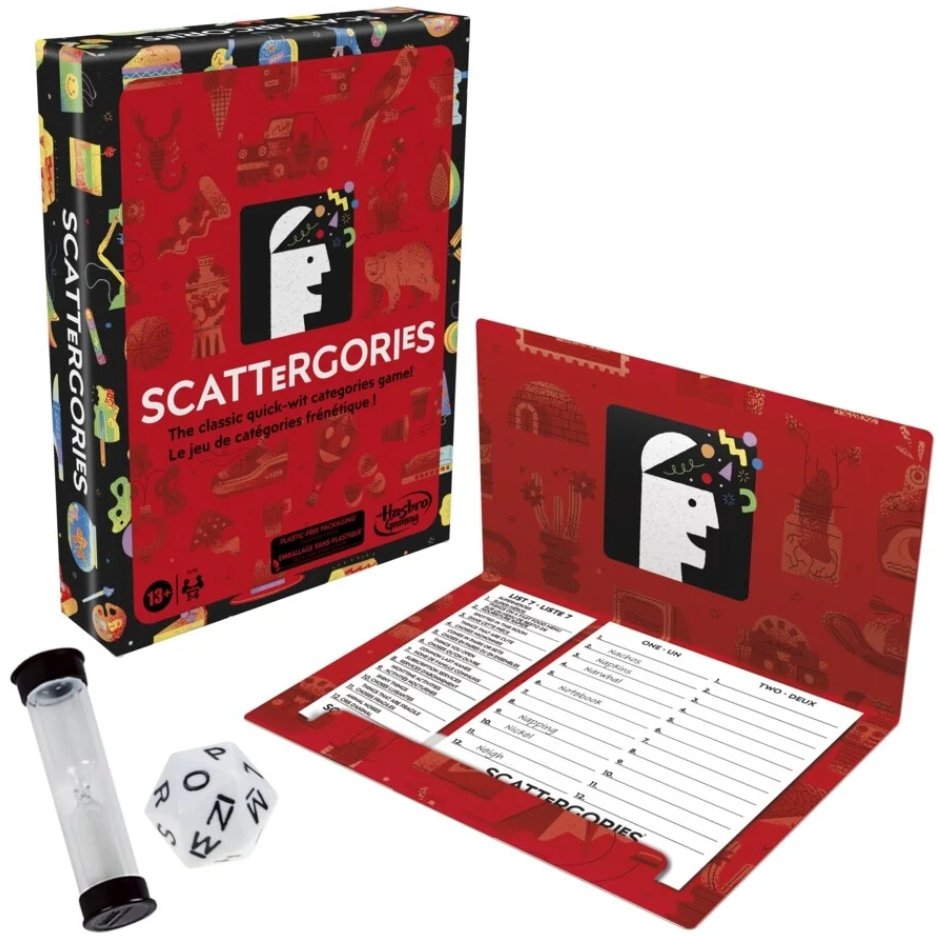
Scattergories requires players to think of words that fit specific categories and begin with a particular letter.
For example, if the letter is B, students might need to name an animal, a food, a country, a job, and something found in a classroom. Possible answers include bear, banana, Brazil, baker, and book.
The twist is that players earn more points for unique answers that nobody else has written. This encourages students to reach beyond the most obvious vocabulary.
4) Tutti Fruitti: A Fast-Paced Vocabulary Challenge
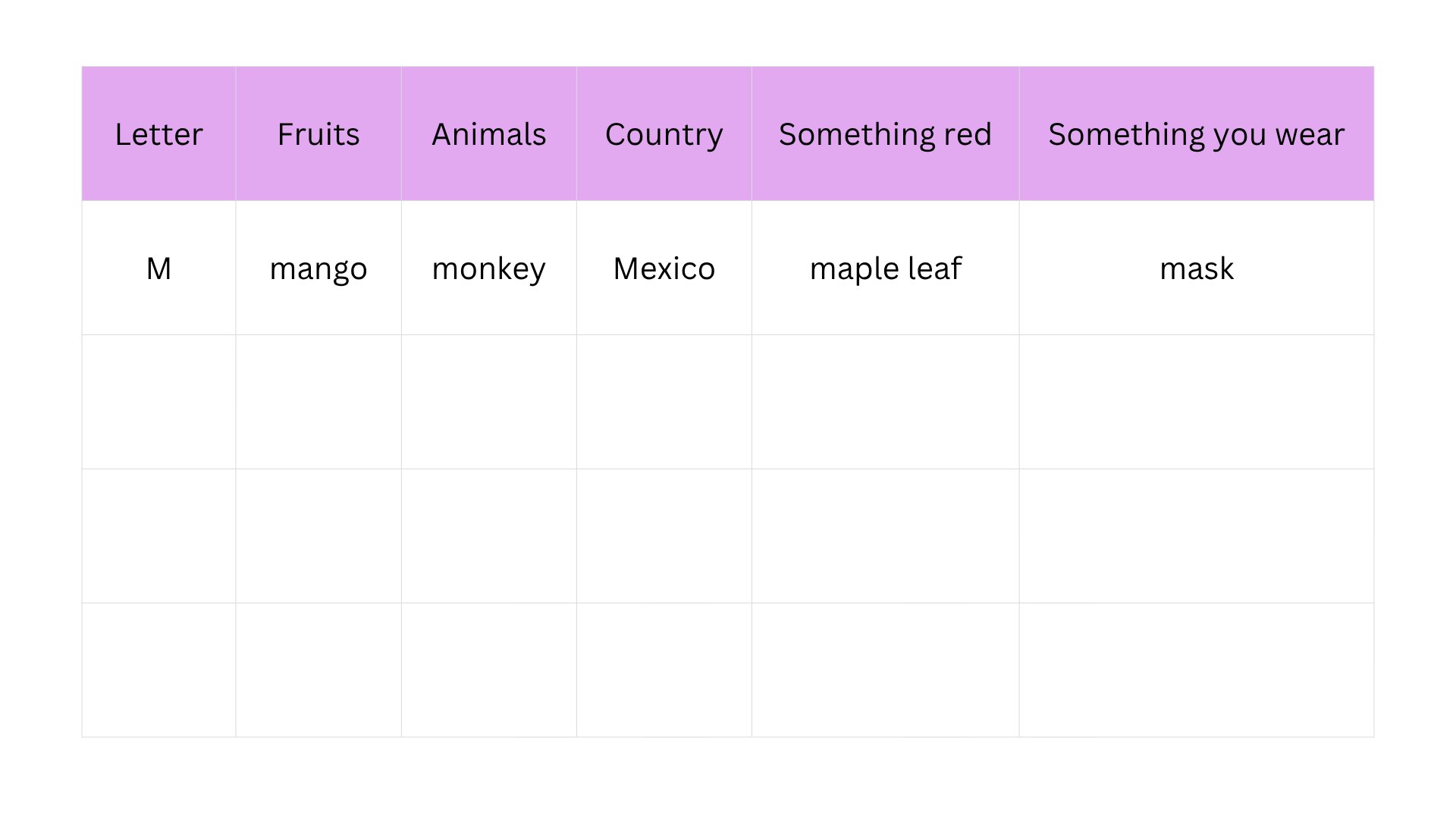
Similar to Scattergories, Tutti Fruitti is a popular word game in which players race to come up with words that begin with a chosen letter and fit different categories.
Create a table with 5-10 different categories and randomly choose a letter. Students need to fill the table with words starting with that letter that fit in the category. It has a more simple format than Scattergories, and you can easily print out the table or send it to your students digitally.
5) Boggle: Find as Many Words as You Can

Boggle is a word-finding game in which players search a grid of letters to create as many words as possible within a time limit. Words are formed by connecting adjacent letters, including diagonally, without using the same letter cube more than once in a single word.
For ESL students, Boggle is an excellent way to practice recognizing spelling patterns and recalling words under pressure.
Word games give students a break from traditional lessons and help them retrieve vocabulary and experiment with language! Which of these games would you like to try with your ESL students? Stay tuned for Part 2, where we’ll explore five more exciting games that can help your students develop their vocabulary, speaking, and communication skills in English!

Related Posts