Last week, we introduced niksen, the Dutch concept of deliberately doing nothing. We also shared…
Project-Based English: The Survival Challenge
In our Project-Based English series so far, we’ve covered two projects to spark your students’ creativity and critical thinking while getting them to talk freely in English: Dragon’s Den and 100 Uses for Common Objects. The third project we’re introducing this week is The Survival Challenge and it’s the one most likely to generate genuine, heated, productive discussion in your classroom.
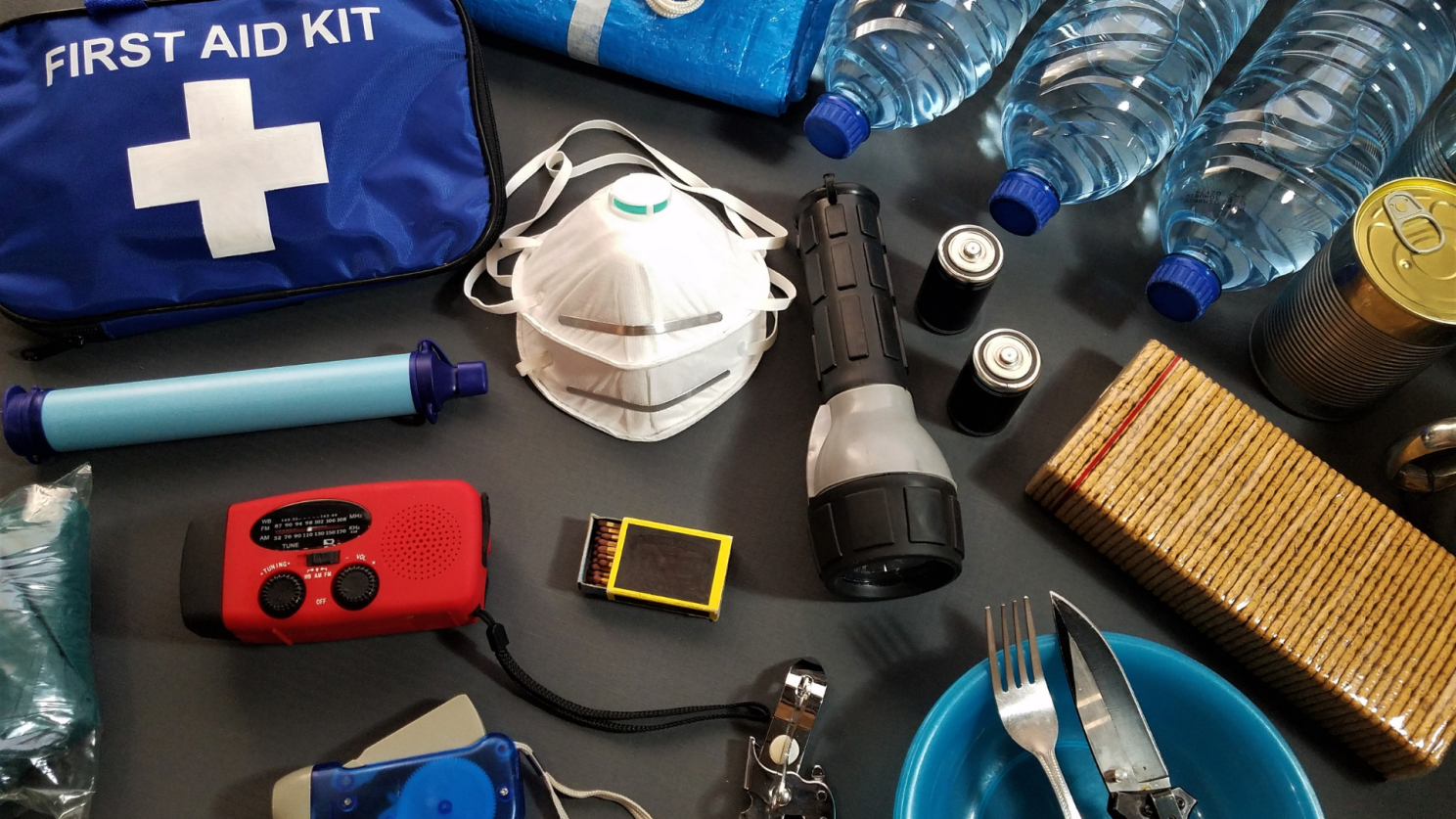
The premise of this activity is in groups of 2-3, students select 10 survival items from a curated master list, defend their choices to the class, and then work together as a whole group to build a single consensus survival kit. The stakes are imaginary, but this project promotes heavy English use!
The Master List of Items
Present your students with a list of 25-30 items to choose from. The list should include obvious essentials alongside tempting but debatable options, so that no two groups end up with identical kits. Here’s a sample to get you started. Feel free to adapt it for your class.
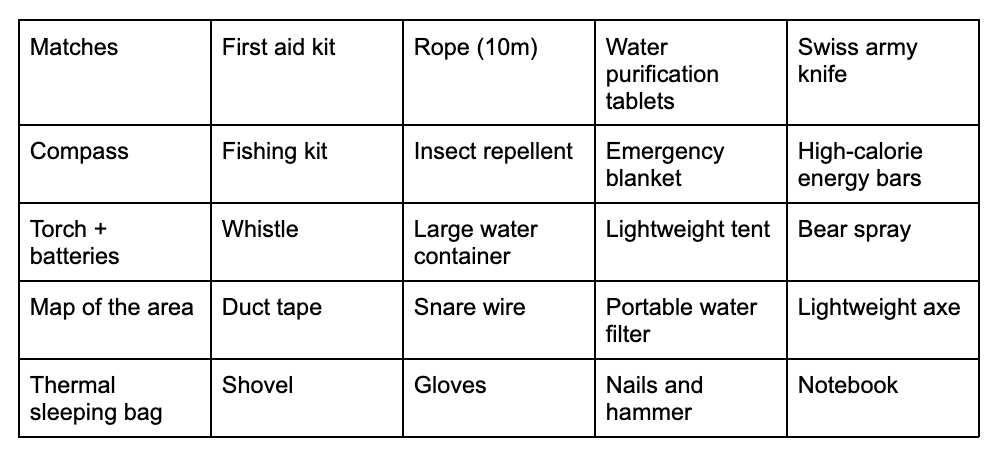
You can deliberately include a few overlapping items, like both a compass and a map, both matches and a torch, so that groups are forced to justify a choice between near-equivalents. These friction points generate the best debates.
How to Run: Project-Based English (The Survival Challenge)
These steps can take place over various classes. You decide on the pacing.
1) Set the Scene

Frame the scenario clearly: The class is going on a group survival trip to a remote wilderness location and will be completely cut off for one week. Each group is responsible for packing their own kit, but at the end, the class will vote on a shared list of items that everyone will rely on.
The stakes of the final vote should feel real. Ask your students to imagine that their class is actually going to be thrown into the wilderness for seven days. How will they live with the consequences of their decision?
2) Individual Selection

As a class, review the master list of items (present it on a shared screen) and make sure your students know what each item is. You can feel free to include images or further explain the object if there’s any confusion. To make it extra fun, invite different students to draw an image of one of the items on the shared screen.
Once everyone knows what the items are, ask your students to write a list of 10 items they would personally like to bring on their weeklong wilderness trip. At this point, there is no discussion, and students don’t have to justify their choices. They only need to record the list of 10 items.
3) Group Selection

Divide students up into groups of 2-3 and place them in breakout rooms. Try to match students with different classmates for each Project-Based English activity so students have the opportunity to work with various people.
In the breakout rooms, each team member shares their list of 10 items. Then, as a group, they must reach consensus on 10 items to keep, meaning every item must be agreed upon by the entire team before it goes on the group list. Each group must be prepared to provide brief justifications for their choices.
4) Prepare the Defence

Each group prepares a short presentation of their survival kit. It’s not enough to just state what they chose, but they must explain why each item earns its place over the alternatives. Prompt them to think in terms of priority (what keeps you alive first?), versatility (how can the item perform various jobs?), and risk (what’s the worst thing that could happen without it?).
You can provide some language scaffolds to help students structure their responses. For example, “We chose X over Y because…”, “The main advantage of X is…”, “Without X, you risk…”
5) Group Presentations

Each group presents their kit to the class. After each presentation, other groups can challenge their choices and the presenting group must defend their decisions in real time. This unscripted Q&A is where the richest language happens. You can make it a requirement for each student to ask at least one question to another group.
6) The Class Debate and Vote

With all the kits on the table, the class now works together to create one shared list of 10 survival items. Items that appear on every group’s list are likely safe choices, while contested items move into discussion. You facilitate the conversation, but the class ultimately makes the decisions.
For any items still disputed after discussion, hold a structured class vote. Each student must briefly explain their reasoning before casting their vote. For example, instead of simply saying, “I vote for the fishing kit,” they should say, “I vote for the fishing kit because it provides a renewable food source, whereas energy bars will eventually run out.”
The class ends with a finalized survival list that everyone contributed to and can see displayed on the screen.

The Survival Challenge works so well because there’s no single “correct” answer. Students are constantly weighing priorities, defending opinions, responding to objections, and negotiating with others, all while using English for a real communicative purpose.
Instead of practicing isolated grammar points or scripted dialogues, they’re actively using the language to solve problems together.
If you enjoyed this activity, be sure to subscribe to LatinHire’s Weekly Newsletter for more Project-Based English ideas, online teaching strategies, and practical classroom activities you can start using right away!

Related Posts