
In the hustle and bustle of today’s world, being busy is often treated like a…

How to Teach Homophones in Your Online English Classroom
If you’ve been teaching English for any length of time, you’ve probably encountered some of these mistakes before: “I want to go to.” “Your doing a good job.” “They forgot there bags.” And it’s not just ESL students. Homophone errors are remarkably common among native English speakers too. Just take a quick scroll through social media!

What makes homophones so tricky is that they sound identical but are spelled differently and have completely different meanings. English learners find these words particularly challenging because they often connect English spelling to pronunciation, so when two words sound the same but look different on paper, it disrupts their mental framework.
The most effective way to master homophones is repeated, varied exposure in context. There’s no real shortcut. This guide walks you through common homophones to start with and offers practical strategies and activities to help your online ESL students learn to differentiate homophones in a way that’s engaging and easy to remember.
The Most Common Homophones to Teach First
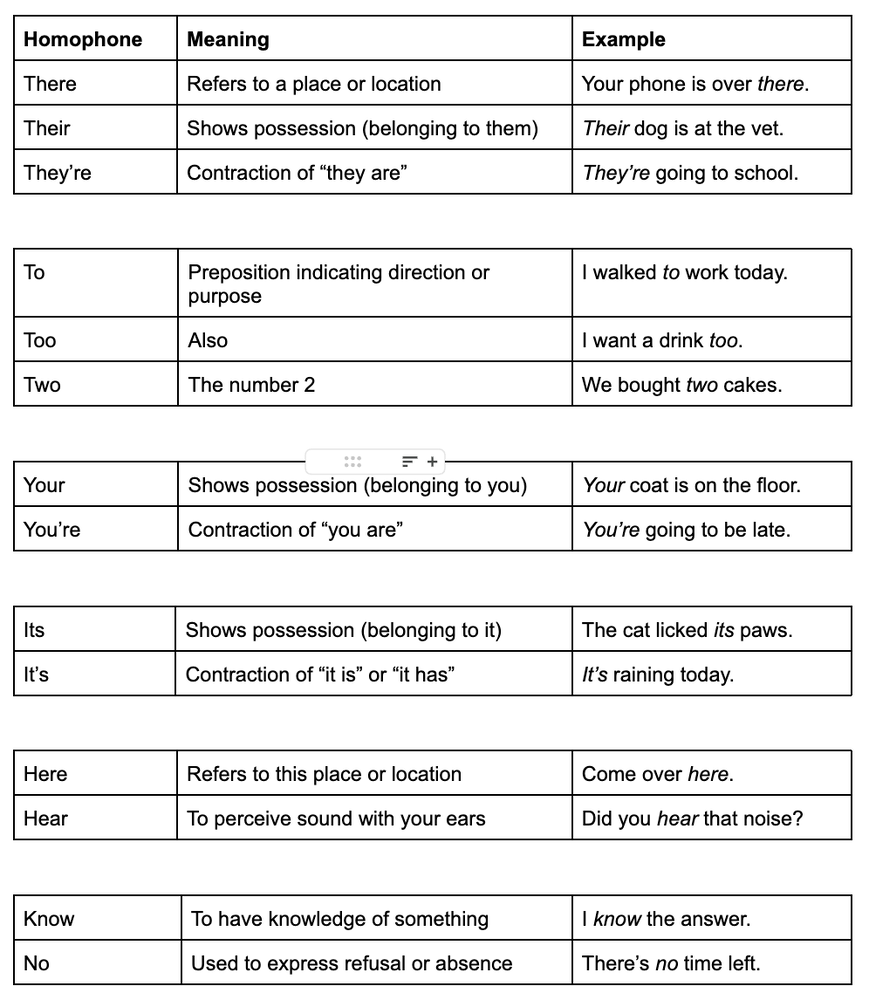
Focus on the high-frequency pairs first as they appear constantly in everyday English and show up in virtually every writing task your students face. Here’s a list to help you get started:
Intermediate Level Homophones
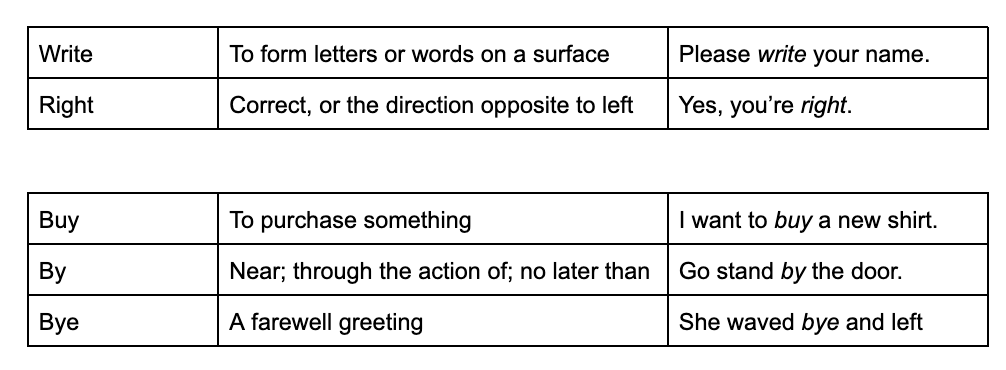
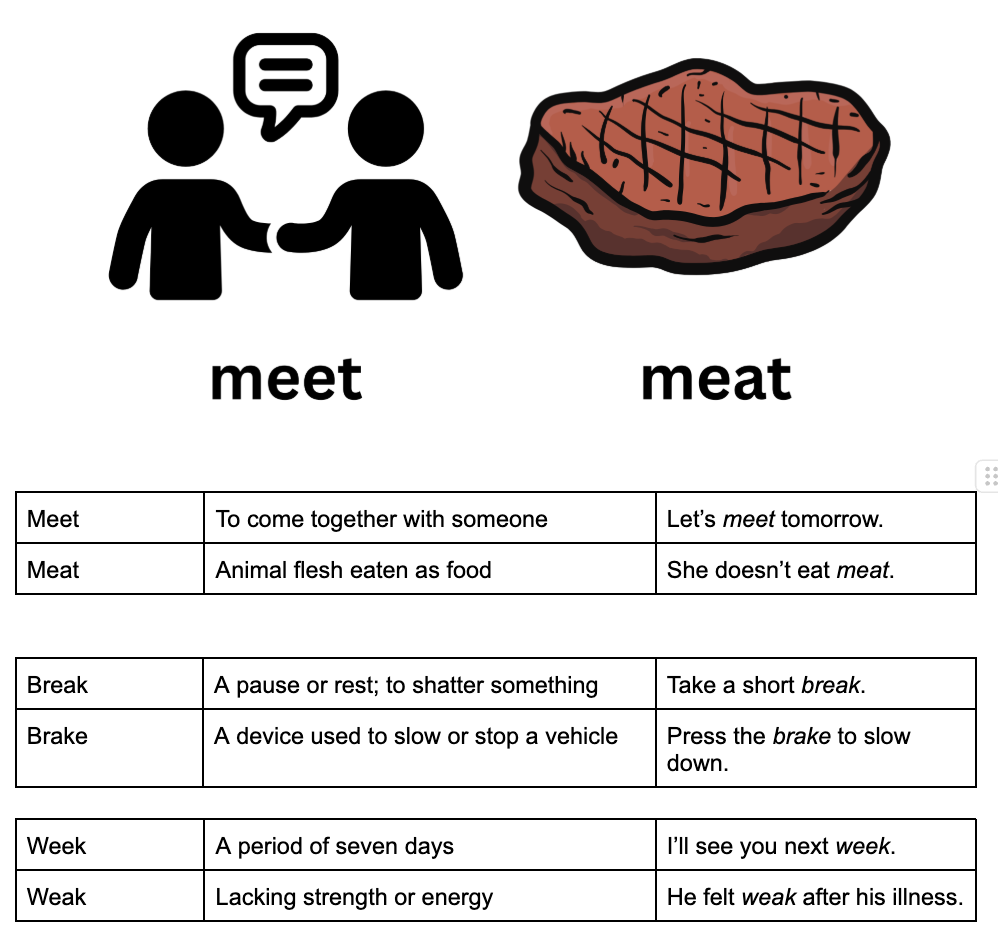
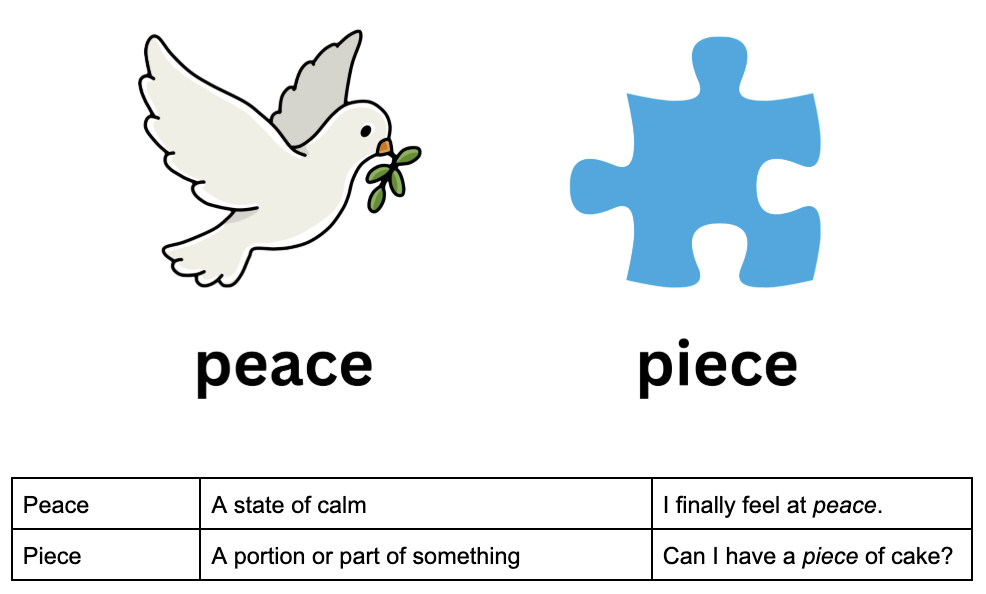
Once your students are confident with the most common homophones, you can begin introducing more advanced pairs. The examples below are just a starting point. There are plenty more you can weave into your lessons as students progress.

Teaching Strategies for Online Classrooms
1) Context Before Rules

Always teach homophones in full sentences rather than as isolated word pairs. Give as many examples as you can. A simple way to open up a lesson is to display a set of sentences on screen and ask students what they notice before offering any explanation. For example: “Put the bag there. It’s not their bag. They’re going to be angry.” That moment of curiosity and independent analysis will make the homophones stick better than teaching the grammar directly.
2) Pair Writing Drills
Show a list of 4-5 homophone pairs side by side and have students write one original sentence for each. Writing forces students to actively think and make connections, which is more effective than passively reading explanations or examples.
3) Fill in the Blanks
Give students sentences with blanks and homophone options, like “I love ___ new haircut. (your/you’re)” They can complete these on their own first and then you can take it up with the class.
4) Dictation Practice

Read a sentence with a homophone aloud and have students type or write it down. Because homophones sound identical, students are forced to rely on the context of the sentence to choose the right spelling.
5) Error Correction
Show photos of real homophone mistakes from social media posts, shop signs, menus, or product descriptions and ask students to find and fix the errors. This activity is naturally engaging because it shows students that even native speakers and professional writers slip up.
You can also write a short paragraph with five or six deliberate homophone errors and display it on the screen. Students have to find the mistakes and correct them in the chatbox. This format works well as a warm-up or closing activity, and students often find it satisfying like solving a puzzle!
Things to Keep in Mind

1) Don’t teach too many homophones at once. Overwhelming students with too many pairs in one lesson means none of them stick. Pick 4-6 homophones and practice them until students perfect them.
2) Don’t rely on homophone lists without context. A table of homophones on a slide is a reference tool, not a teaching tool. Always pair them with real sentences or visuals to help students make those connections.
3) Repetition is essential. Students need to encounter these homophones more frequently to truly remember them. Continue to incorporate the homophones throughout multiple lessons to give students time to internalize them. Even a 5-minute diction or spot-the-mistake warm-up keeps the knowledge fresh.
Found this article useful? Share it with a fellow teacher! And let us know what other English grammar or teaching tools you’d like us to cover in the future. Subscribe to LatinHire’s Weekly Newsletter to stay in the loop.

Related Posts