Looking for a fun way to help your ESL students improve their English? Put away…
10 Best Word Board Games for ESL Students (Part 2)
Looking for even more fun ways to help your ESL students improve their English? We’re back with Part 2 of our board game series!
Board games are a great way to make lessons more enjoyable and encourage students to think creatively, while expanding their vocabulary and communication skills with classmates. Some games also help students develop storytelling skills, critical thinking, and teamwork.
This week, we’ll introduce five more games that can make excellent additions to your ESL classroom. And if you teach online, don’t worry! Several of these games can be adapted for virtual lessons too.
1) Bananagrams: Race to Build Words

Bananagrams is a fast-paced word game similar to Scrabble, but without a game board. Players use letter tiles to create their own interconnected crossword-style grids. The goal is to use all your letters to form valid words before the other players finish.
For ESL students, Bananagrams is a fantastic way to practice spelling, expand vocabulary, and recognize common letter combinations. It also encourages students to think quickly and experiment with different word formations.
2) Dixit: Tell a Story Through Pictures
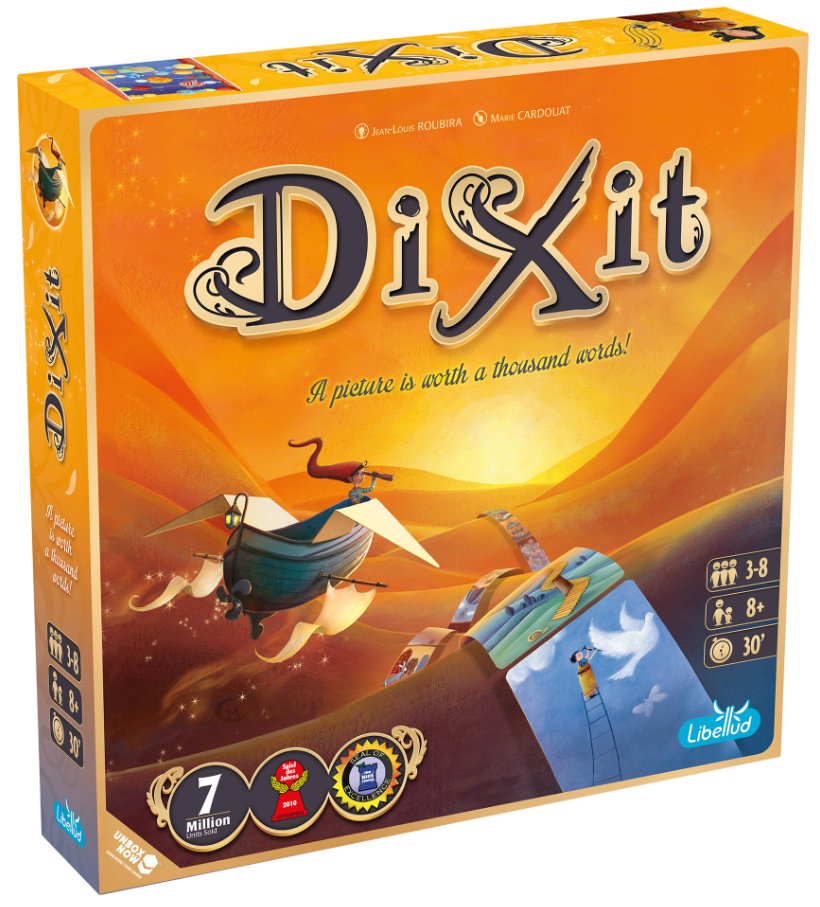

Dixit is a creative storytelling game that uses beautifully illustrated cards featuring imaginative and sometimes abstract images. Players take turns choosing a card and giving a word, phrase, or sentence that describes it. Other players then select a card from their own hands that they think match the clue. Everyone tries to guess which card belongs to the storyteller.
For English learners, Dixit is great for practicing descriptive language, storytelling, and creative thinking. Since the illustrations can have multiple interpretations, students have plenty of opportunities to express their ideas and explain their reasoning.
3) Telestrations: Draw What You Hear!
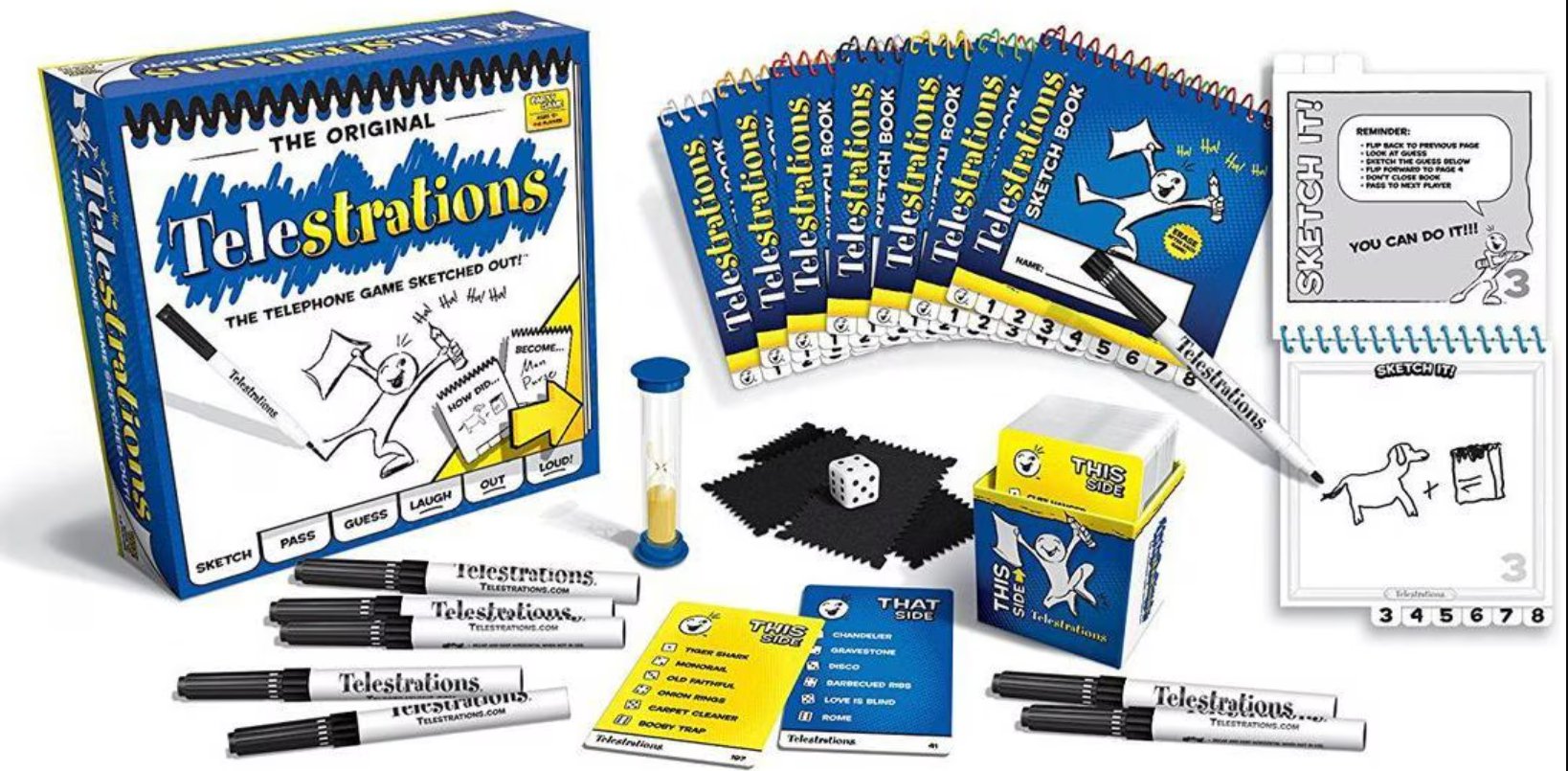
Telestrations is a hilarious drawing and guessing game that combines elements of Pictionary and the classic game of Telephone. Each player starts with a secret word, draws a picture representing it, and passes their drawing to the next player.
The next player has to guess what the picture represents and write down their answer. The following player looks at the answer and draws a picture. The process continues, alternating between drawing and guessing, until everyone gets their original booklet back.
The funniest part is seeing how much the original word changes along the way!
4) Codenames: Make Connections Between Words
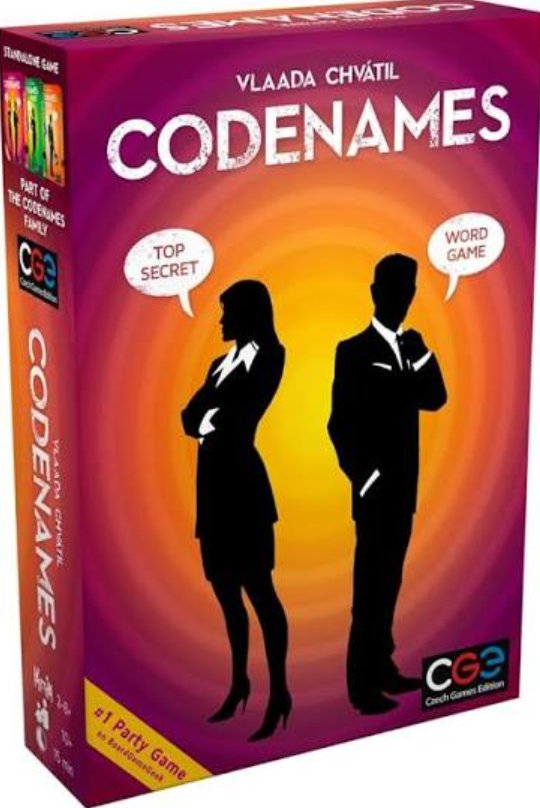
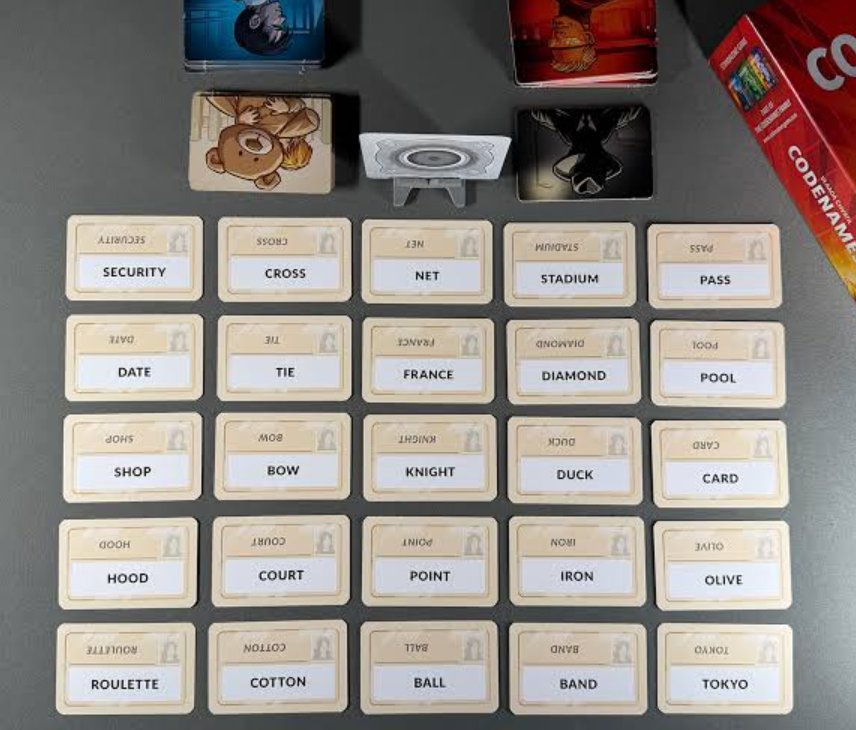
Codename is a team-based word association game in which players try to identify specific words from a grid of cards based on clues by their teammates.
For example, if the target words are apple, banana, and orange, a teammate might give the clue “fruit” to help their team identify all three words. However, they need to be careful not to select words belonging to the opposing team or the dangerous assassin card!
Codenames is a game better suited for high intermediate to advanced English learners. It’s an excellent way to help students develop vocabulary associations, practice synonyms and think critically about the relationships between words.
5) Werewolf: Can You Find the Werewolves?

Werewolf is a social deduction game in which players are secretly assigned different roles, usually villagers and werewolves. During the night phase, the werewolves secretly choose a villager to eliminate. During the day phase, everyone discusses what happened, share suspicions, and votes on who they believe the werewolves are.
The villagers win by identifying and eliminating all the werewolves, while the werewolves win if they outnumber the villagers. Although Werewolf isn’t traditionally a word game, it’s a fantastic activity for ESL students because it requires plenty of speaking, listening, questioning, and persuasion.
Which of these games would you like to try? And what games have you played with your ESL classes before? Share them in the comments section!

Related Posts